Tools
Python Pandas and scikit-learn (Regression Analysis); Python Seaborn and Matplotlib (Data Visualization); Google CoLab (Collaborative Computing)
Results and Deck
A presentation deck and a file of our the models we created can be downloaded bellow.
Overview
Average life expectancy varies from country to country. Predicting life expectancy and understanding its factors may help governments improve life span and quality of life of their population. Our team used a data repository under World Health Organization (WHO) of health factors to perform regression analysis and explore the data.
Findings
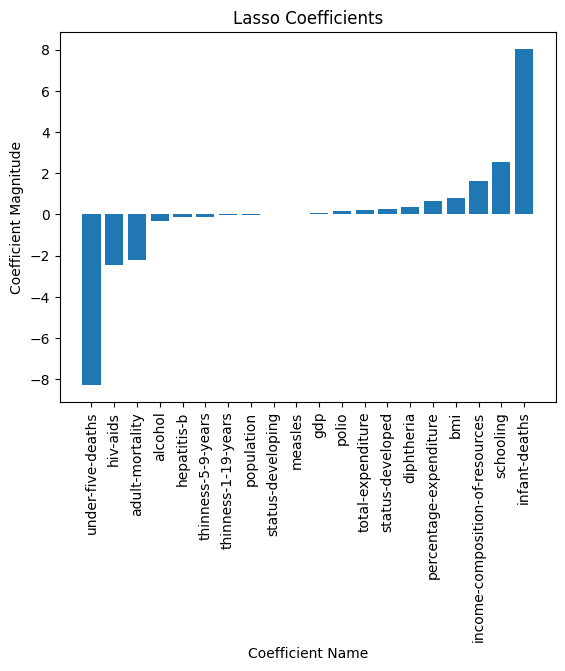
We trained and tested different models to predict life expectancy. Our ML model using a boosting ensemble method performed the best with a Test MSE of 5.0267. Our lasso model suggests coefficients that increase life expectancy include schooling, BMI, and expenditure, whereas coefficients that decrease life expectancy include deaths under the age of 5, HIV/AIDS, adult mortality, and alcohol.